Skip to content
Fowler Lab
Fowler Lab

Predicting antibiotic resistance de novo

  • News
  • Publications
  • Members
  • Research
    • Overview
    • Manifesto
    • Software
    • Reproducibility
  • Teaching
  • Contact
    • PhDs
  • Wiki
Fowler Lab
Fowler Lab

Predicting antibiotic resistance de novo

New paper: predicting pyrazinamide resistance

Philip Fowler, 20th March 202420th March 2024

This paper has finally been published and you can find it here. It had a slightly tortuous journey from original preprint to updated preprint and now publication.

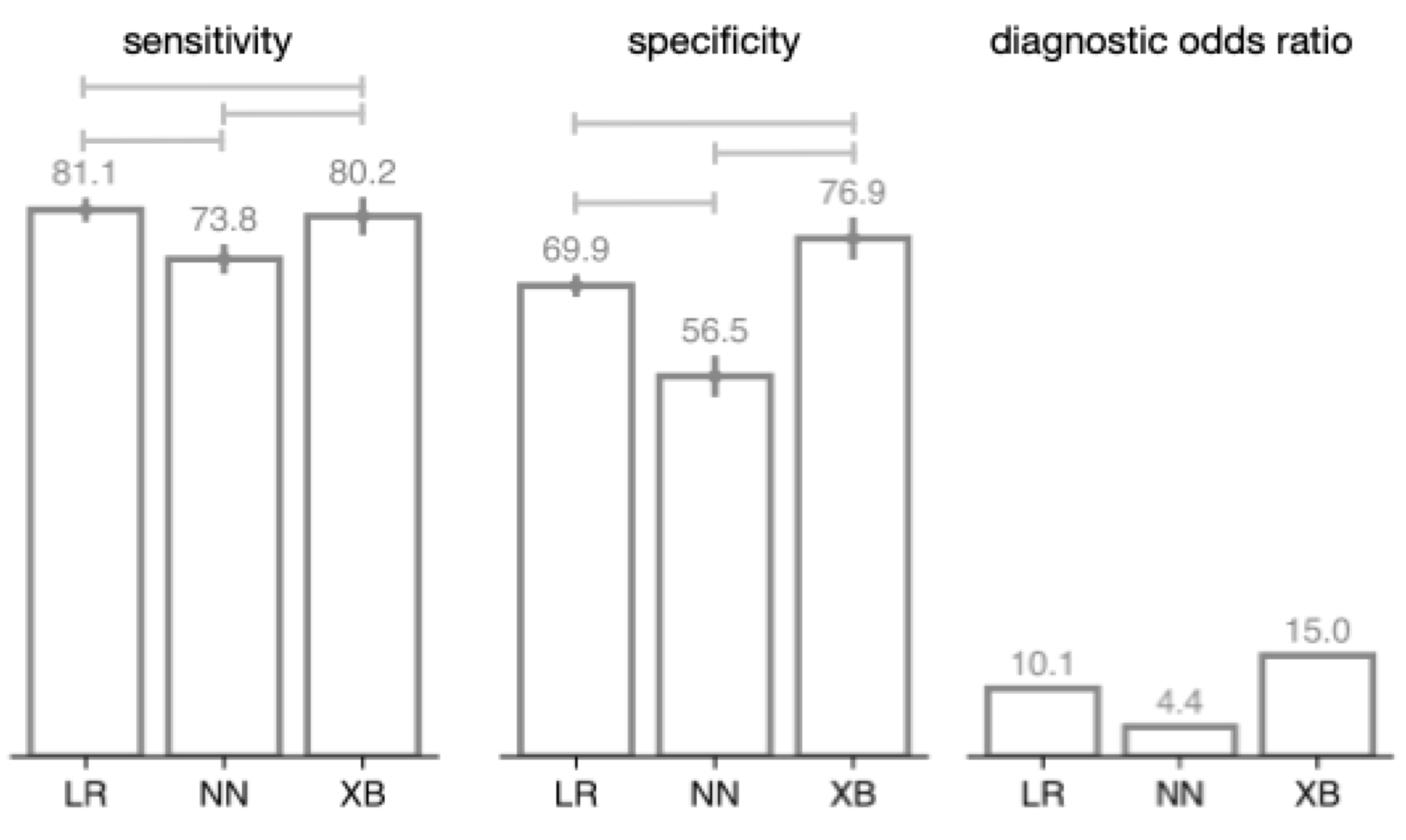
In brief, we use a range of structural, chemical and evolutional features to learn which missense mutations in PncA (encoded by pncA) are associated with resistance to pyrazinamide, one of the four first-line antibiotics used to treat tuberculosis.

This research output is designed to be reproducible; you can retrain all machine learning models and replot (nearly) all the figures in the paper using this GitHub repository.

Share this:

  • Share on X (Opens in new window) X
  • Share on Bluesky (Opens in new window) Bluesky
  • Email a link to a friend (Opens in new window) Email
  • Share on LinkedIn (Opens in new window) LinkedIn
  • Share on Mastodon (Opens in new window) Mastodon

Related

antimicrobial resistance clinical microbiology publication research tuberculosis
Post navigation

Previous post
Next post

Related Posts

antimicrobial resistance

New preprint: compensatory mutations are associated with increased growth in resistant samples of M. tuberculosis.

22nd June 20238th December 2023

In this preprint, Viki Brunner shows how, using the large CRyPTIC dataset, she can recapitulate…

Share this:

  • Share on X (Opens in new window) X
  • Share on Bluesky (Opens in new window) Bluesky
  • Email a link to a friend (Opens in new window) Email
  • Share on LinkedIn (Opens in new window) LinkedIn
  • Share on Mastodon (Opens in new window) Mastodon
Read More
antimicrobial resistance

New software: pygsi

31st August 2018

Whenever a paper involving sequencing the genome of bacteria (or other species for that matter),…

Share this:

  • Share on X (Opens in new window) X
  • Share on Bluesky (Opens in new window) Bluesky
  • Email a link to a friend (Opens in new window) Email
  • Share on LinkedIn (Opens in new window) LinkedIn
  • Share on Mastodon (Opens in new window) Mastodon
Read More
publication

New Publication: Protein crowding affects the organisation of ion channels

3rd December 201729th September 2018

Protein crowding and lipid complexity influence the nanoscale dynamic organization of ion channels in cell…

Share this:

  • Share on X (Opens in new window) X
  • Share on Bluesky (Opens in new window) Bluesky
  • Email a link to a friend (Opens in new window) Email
  • Share on LinkedIn (Opens in new window) LinkedIn
  • Share on Mastodon (Opens in new window) Mastodon
Read More

Leave a Reply Cancel reply

Your email address will not be published. Required fields are marked *

This site uses Akismet to reduce spam. Learn how your comment data is processed.

Privacy & Cookies: This site uses cookies. By continuing to use this website, you agree to their use.

To find out more, including how to control cookies, see here: Cookie Policy
    ©2026 Fowler Lab | WordPress Theme by SuperbThemes