HackDay: Data on Acid
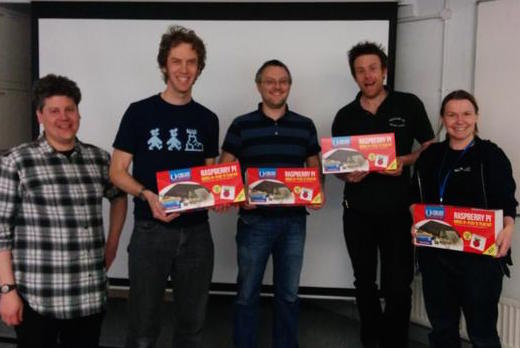
Every year the Software Sustainability Institute (SSI) run a brilliant meeting called the Collaborations Workshop, usually in Oxford. This is an unconference lasting two days. At first glance it doesn't look like it would be relevant to my research, but I always learn something new, meet interesting people and start, well, collaborations. The latest edition was last week and was the fourth I've attended. (Disclaimer: for the last year-and-a-bit I've been an SSI fellow which has been very useful - this is how I managed to train up to be a Software Carpentry Instructor. Alas my tenure has now ended). For the last two years the workshop has been followed by a hackday which I've attended. Now I'm not a software developer, I'm a research scientist who uses million-line community-developed codes (like GROMACS and NAMD), but I do write code, often python, to analyse my simulations and also to automate my workflows. A hackday therefore, where many of the participants are research software engineers, pushes me clear out of my comfort zone. I remember last year trying to write python to access GitHub using its API and thinking "I've never done anything like this before and I've no idea what to do.". This year was no different, except I'd pitched the idea so felt responsible for the success of the project. The name of the project, Data on Acid, was suggested by Boris Adryan and the team comprised myself, Robert Haines, Alys Brett, Joe Parker and Ian Emsley. The input was data produced by a proof of principle project I've run to test if I can predict whether individual mutations to S.aureus DHFR cause resistance to trimethoprim. The idea was to then turn it into abstract forms, either visual or sound, so you can get an intuitive feel for the data. Or it could just be aesthetic. To cut a long story short, we did it, it is up on GitHub and we came third in the competition! In the long term I'd like to develop it further and incorporate it into my volunteer crowd-sourced project, bashthebug, that aims to predict whether bacterial mutations cause antibiotic resistance or not (when it is funded that is).