Successful NIHR grant

Last year I coordinated a bid to the NIHR for capital to improve our research capacity to study antimicrobial resistance (AMR) at the Oxford Biomedical Research Centre. We were successful and were awarded £1.8 million to fund several different activities, including developing vaccines to prevent the spread of AMR. 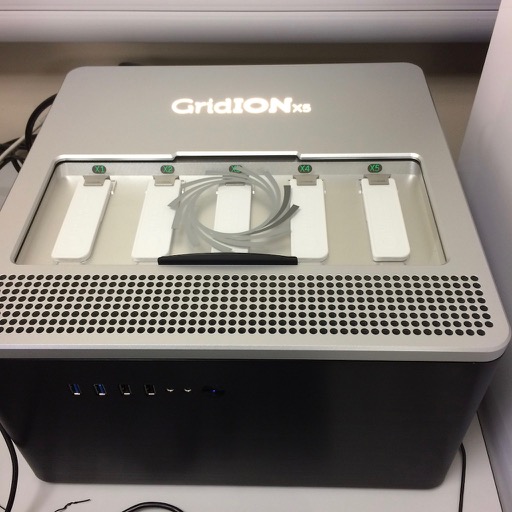 Previously in the John Radcliffe hospital Clinical Microbiology had one small second-generation genetic sequencer; now as a result of the grant we have a second, but more crucially, two very high-throughput third-generation genetic sequencers. These are GridIONs from Oxford Nanopore and sequence DNA in a completely different way that could revolutionise the use of genetics in Clinical Microbiology. Grants like this all too-often often focus on the experimental equipment at the expense of the compute and storage
  you need to analyse and store the data. We were fortunate to secure funds to provide a small processing cluster in the room next to the sequencing facility in addition to much larger storage and compute at the Big Data Institute, part of which my group will be able to use to continue to develop methods for de novo prediction of the effect of individual protein mutations on the actions of antibiotics.